The Complete Guide to SATA, SAS, MCIO, and SlimSAS Cables: Applications, Differences & Selection Criteria
Introduction: The Critical Role of Data Cables in Modern Storage & Computing
In an era defined by exponential data growth, the physical connections that carry information between storage devices, servers, and computing systems remain foundational to performance and reliability
server internal cables represent key interface technologies that enable everything from consumer hard drives to enterprise AI infrastructure. This comprehensive guide provides technical professionals, system builders, and IT decision-makers with the knowledge needed to select and implement the right cabling solution for every application.
Technology Overview: Four Critical Interface Standards
SATA (Serial ATA) Cables: The Consumer Storage Standard
SATA has dominated consumer and entry-level storage since its introduction in 2003, evolving through three generations of increased speed while maintaining backward compatibility.
Related Products
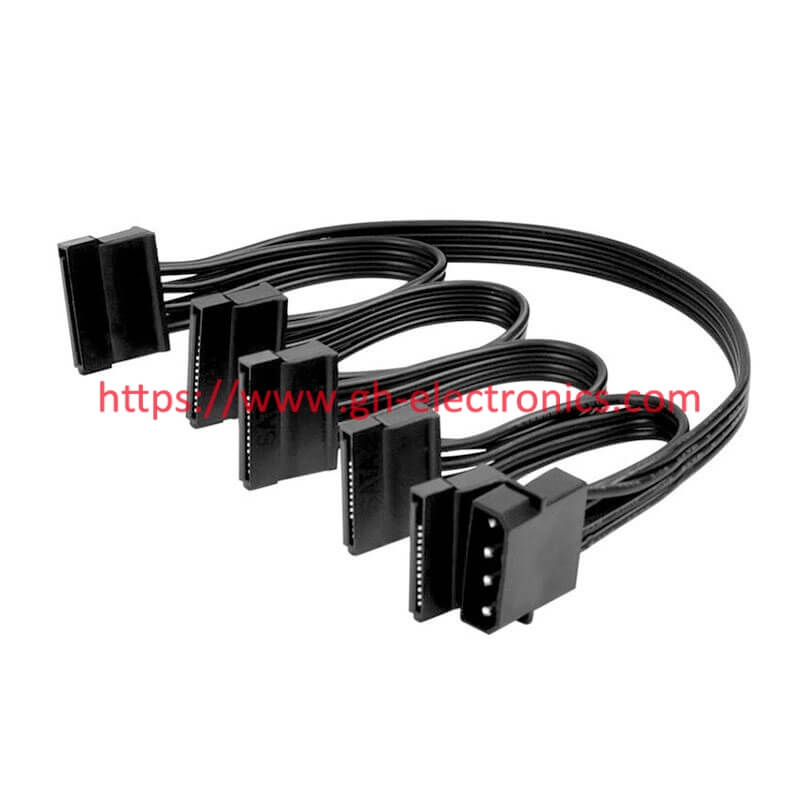
IDE to SATA power cable
Key Specifications:
. SATA Revision 1.0: 1.5 Gb/s (150 MB/s)
. SATA Revision 2.0: 3.0 Gb/s (300 MB/s)
. SATA Revision 3.0: 6.0 Gb/s (600 MB/s)
. SATA Revision 3.2: 16 Gb/s (1969 MB/s) via SATA Express
. Power Connectors: 15-pin with 3.3V, 5V, and 12V rails
. Data Connectors: 7-pin L-shaped keyed connectors
. Cable Length: Limited to 1 meter for reliable operation
Common Applications:
. Desktop and laptop HDD/SSD connections
. Optical drives (DVD/Blu-ray)
. Consumer NAS and DAS systems
. Gaming console storage upgrades
Limitations:
. Point-to-point topology only (one device per port)
. No dual-port capability for redundancy
. Limited cable length restricts deployment options
. No native command queuing optimization for enterprise workloads
SAS (Serial Attached SCSI) Cables: The Enterprise Workhorse
SAS represents the enterprise evolution of parallel SCSI, offering superior performance, reliability, and flexibility for mission-critical applications.
Related Products
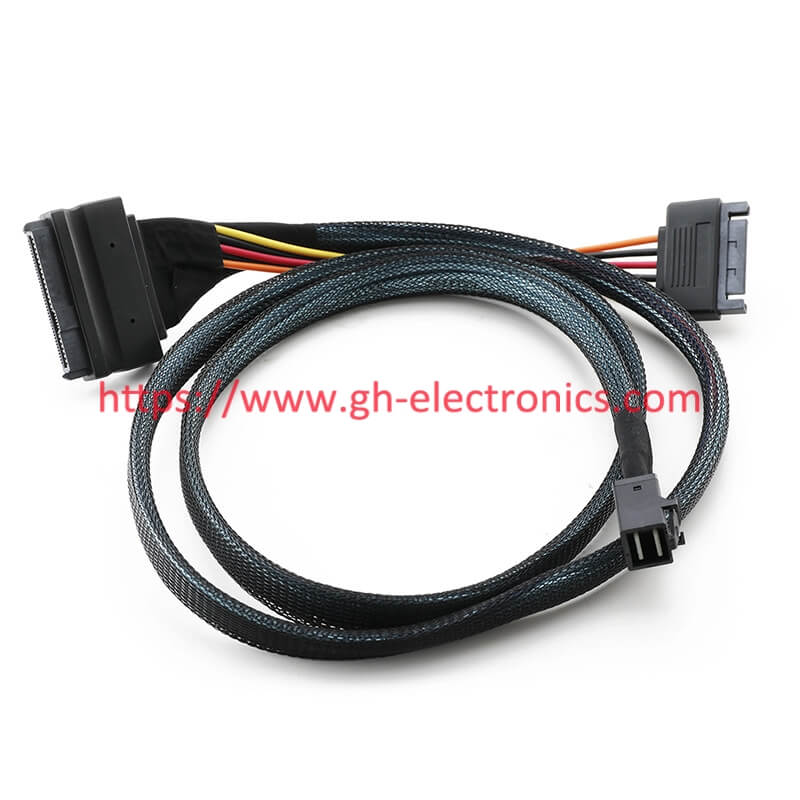
SFF‑8643 to SFF‑8639
Key Specifications:
. SAS-1: 3 Gb/s (300 MB/s per lane)
. SAS-2: 6 Gb/s (600 MB/s per lane)
. SAS-3: 12 Gb/s (1200 MB/s per lane)
. SAS-4: 22.5 Gb/s (2250 MB/s per lane)
. SAS-5: 45 Gb/s (in development)
. Connector Types: SFF-8482, SFF-8643, SFF-8644, SFF-8654
. Topology: Point-to-point, arbitrated loop, or switched fabric
. Cable Length: Up to 10 meters with active components
Critical Advantages:
. Dual-Port Capability: Two independent paths to each device
. Full Duplex Operation: Simultaneous bidirectional communication
. Expander Support: Single host connection to hundreds of devices
. Mixed Backplane Support: SATA compatibility on SAS controllers
. Enhanced Error Recovery: Superior to SATA for mission-critical data
Enterprise Applications:
. High-performance server storage arrays
. Storage area networks (SANs)
. RAID systems and JBOD enclosures
. Database servers and virtualized environments
. High-availability systems requiring multipath I/O
MCIO (Multi-Gigabit Channel I/O) Cables: The High-Density Specialist
MCIO represents a paradigm shift toward extreme density and flexibility, originally developed by IBM and now standardized in the Open Compute Project.
Related Products
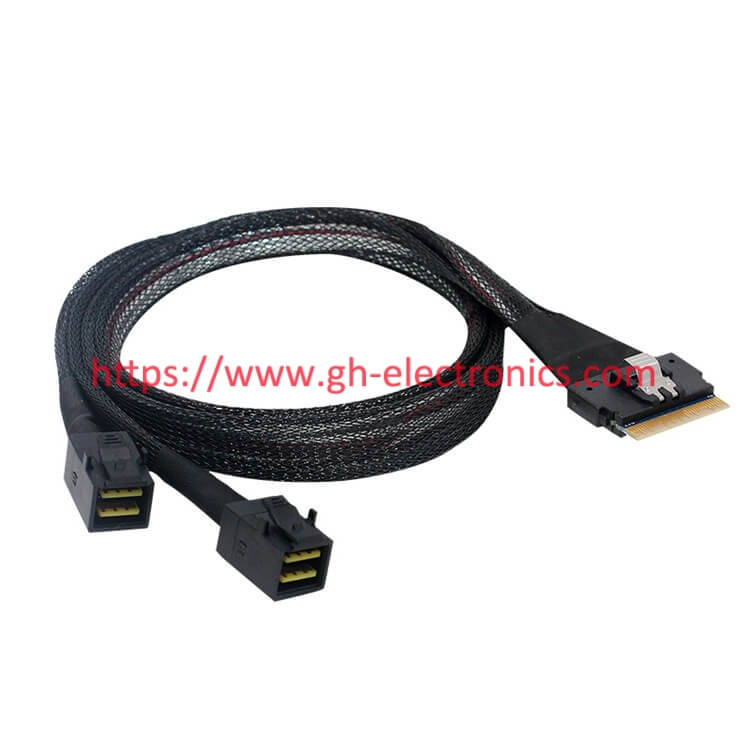
SFF-8654 to SFF-8643
Key Specifications:
. Connector: SFF-TA-1016 (previously known as MCIO)
. Lane Configurations: x2, x4, x8 lane variants
. Speeds: Supports PCIe 4.0, 5.0, and upcoming 6.0
. Signal Integrity: Optimized for 25+ Gb/s NRZ and 50+ Gb/s PAM-4
. Power Delivery: Up to 70W per cable in some configurations
. Form Factor: Extremely compact with robust latching mechanism
Key Differentiators:
. Protocol Agnostic: Supports PCIe, Ethernet, InfiniBand, and other protocols
. Extreme Density: Up to 16 lanes in a connector smaller than traditional PCIe
. Thermal Management: Designed for optimal airflow in dense configurations
. Sideband Signals: Integrated I2C, USB 2.0, and other management interfaces
Primary Applications:
. GPU/accelerator interconnects in AI/ML systems
. NVMe-oF (NVMe over Fabrics) implementations
. High-performance computing clusters
. Next-generation storage appliances
. Disaggregated rack-scale architecture
SlimSAS Cables: The Hybrid Solution
SlimSAS (also known as Mini-SAS HD or SFF-8654) bridges the gap between traditional SAS and emerging high-density requirements, offering improved density without sacrificing SAS compatibility.
Key Specifications:
. Connector: SFF-8654 (8i, 8x, or 4i-4x configurations)
. Lane Configurations: x4 or x8 lanes
. Protocol Support: SAS, SATA, PCIe
. Speeds: Up to 24 Gb/s per lane (SAS-4)
. Form Factor: Approximately 40% smaller than SFF-8644
. Power Delivery: Enhanced power capability over previous generations
Design Advantages:
. Backward Compatibility: Works with existing SAS infrastructure
. Improved Density: Higher port density on controller cards and backplanes
. Robust Latching: Positive retention in high-vibration environments
. Versatile Application: Suitable for both internal and external connections
Typical Deployments:
. High-density server storage configurations
. All-flash array interconnects
. Storage controller to backplane connections
. Mid-range enterprise storage systems
Comparative Analysis: Selecting the Right Technology
Performance Comparison Matrix
|
Criteria |
SATA |
SAS |
SlimSAS |
MCIO |
|
Max Speed per Lane |
6-16 Gb/s |
22.5 Gb/s |
24 Gb/s |
64 Gb/s+ |
|
Typical Deployment |
Consumer/Desktop |
Enterprise Storage |
Enterprise/Cloud |
HPC/AI
|
|
Topology Support |
Point-to-point |
Multipath, expandable |
Multipath |
Flexible |
|
Protocol Support |
SATA only |
SAS, SATA |
SAS, SATA, PCIe |
Agnostic |
|
Dual-Port |
No |
Yes |
Yes |
Configurable |
|
Cable Length Limit |
1m |
10m+ |
3m+ |
2m+ |
|
Cost Profile |
$ |
$$ |
$$-$$$ |
$$$ |
Application-Specific Recommendations
For Traditional Enterprise Storage:
. Mainstream applications: SAS 12Gb/s or 24Gb/s
. Budget-conscious deployments: SATA for nearline/cold storage
. High-availability systems: SAS with dual-port drives
. Dense configurations: SlimSAS for improved density
For Cloud & Hyperscale Infrastructure:
. General purpose: SAS 24Gb/s or SlimSAS
. High-performance tiers: NVMe over SlimSAS
. Accelerator-heavy workloads: MCIO for GPU interconnects
. Cost-optimized cold storage: High-density SATA configurations
For AI/ML & HPC Environments:
. GPU-to-GPU communication: MCIO with PCIe 5.0/6.0
. Accelerated storage: NVMe over MCIO or SlimSAS
. Training data storage: All-flash arrays with SlimSAS
. Checkpoint storage: High-capacity SAS JBODs
For Edge & Industrial Applications:
. Rugged environments: SAS with enhanced vibration tolerance
. Space-constrained: SlimSAS for compact form factors
. Extended temperature: Specialized SAS variants
. Long-distance: SAS with active optical cables
Design Considerations & Implementation Best Practices
Signal Integrity & Cable Construction
Coaxial vs. Twin-Axial Design:
. SATA/SAS: Typically use twin-axial construction for differential pairs
. High-speed variants: Employ advanced shielding and dielectric materials
. Impedance Control: Critical maintenance of 85Ω or 100Ω differential impedance
. Skew Management: Minimizing time delay differences between pairs
Length Limitations & Signal Conditioning:
. Passive Copper Cables: 1-3 meters depending on data rate
. Active Copper Cables: 5-10 meters with embedded re-timers
. Active Optical Cables: 100+ meters for long-reach applications
. Equalization Requirements: Increasingly important at higher speeds
Connector & Latching Mechanisms
Critical Retention Features:
. SAS/SlimSAS: Positive latch with audible click and extraction tool provision
. MCIO: Robust dual-side latching for high-vibration environments
. SATA: Friction fit (consumer) or positive latch (enterprise variants)
. Extraction Forces: Typically 10-50N depending on configuration
Durability & Mating Cycles:
. Commercial Grade: 50-250 mating cycles
. Enterprise Grade: 250-500 mating cycles
. High-Reliability: 500-1000+ mating cycles
. Contact Plating: Gold flash over nickel for optimal conductivity
Thermal Management & Power Delivery
Heat Dissipation Challenges:
. High-speed operation: Increased power consumption in retimers
. Dense configurations: Limited airflow around connectors
. Power-over-cable: Additional thermal load from power delivery
Cooling Strategies:
. Airflow Optimization: Cable routing to minimize obstruction
. Heat Spreading: Thermal management in connector housings
. Power Sequencing: Managing inrush currents in multi-drive systems
Future Trends & Emerging Standards
Speed Evolution Timeline
|
Year |
SATA |
SAS |
PCIe (via MCIO) |
|
2020 |
6 Gb/s |
12 Gb/s |
16 GT/s (PCIe 4.0) |
|
2023 |
16 Gb/s* |
24 Gb/s |
32 GT/s (PCIe 5.0) |
|
2025 |
Limited evolution |
45 Gb/s |
64 GT/s (PCIe 6.0) |
|
2027+ |
Niche applications |
90 Gb/s |
128 GT/s (PCIe 7.0) |
*SATA Express never achieved significant adoption
Industry Shifts & Migration Paths
NVMe Dominance:
. Gradual transition from SAS/SATA to NVMe over Fabrics
. SlimSAS and MCIO as primary NVMe transport mechanisms
. Coexistence period with legacy SAS infrastructure
CXL (Compute Express Link) Integration:
. Emerging memory-semantic protocol over PCIe physical layer
. MCIO as primary physical interface for CXL implementations
. Enhanced coherency and memory pooling capabilities
Optical Convergence:
. Active Optical Cables (AOCs) for longer reach
. Co-packaged optics for extreme density
. Silicon photonics integration in next-generation systems
Procurement & Vendor Selection Guidelines
Quality Assessment Criteria
1. Compliance Certification
. Official standards compliance (SFF, INCITS, etc.)
. Interoperability testing with major OEM equipment
. Signal integrity validation at maximum rated speeds
2. Manufacturing Quality
. Controlled impedance manufacturing processes
. Consistent crimp termination quality
. Comprehensive testing (100% continuity, hipot, etc.)
3. Vendor Qualifications
. Industry experience and reference accounts
. Technical support and design assistance capabilities
. Supply chain resilience and secondary sourcing options
Total Cost of Ownership Considerations
. Initial Acquisition Cost: Cable and connector pricing
. Deployment Efficiency: Ease of installation and serviceability
. Failure Rates: MTBF and impact of cable failures
. Future Migration: Upgrade path and investment protection
. Power Efficiency: Impact on overall system power consumption
Troubleshooting Common Issues
Frequent Connection Problems
1. Link Training Failures
. Symptoms: Intermittent detection, reduced link width
. Causes: Signal integrity issues, connector contamination
. Solutions: Reseat connections, inspect for damage, replace cable
2. Performance Degradation
. Symptoms: Lower throughput than expected, increased latency
. Causes: Cable length near limits, incompatible cable quality
. Solutions: Verify cable specifications, implement shorter runs
3. Physical Damage Patterns
. Symptoms: Broken latches, bent pins, insulation damage
. Causes: Improper handling, excessive strain, repeated mating cycles
. Solutions: Implement proper handling procedures, use extraction tools
System Integration Challenges
. Mixed Vendor Environments: Ensuring cross-vendor compatibility
. Firmware/Driver Issues: Keeping all components at compatible levels
. Cooling Interference: Managing cable impact on system airflow
. Grounding & EMI: Ensuring proper shielding and ground continuity
Conclusion: Strategic Selection for Optimal Infrastructure
The evolution from SATA to SAS to SlimSAS and MCIO represents more than just speed improvements—it reflects fundamental shifts in system architecture from dedicated storage interfaces to converged, protocol-agnostic interconnects. Each technology serves specific market segments and use cases:
. SATA remains adequate for cost-sensitive consumer applications
. SAS continues as the workhorse for traditional enterprise storage
. SlimSAS provides the bridge to higher density with SAS compatibility
. MCIO enables next-generation disaggregated, accelerator-rich infrastructure
Strategic recommendations for 2024-2025:
1. New enterprise storage deployments should standardize on SAS 24Gb/s with SlimSAS connectors
2. AI/ML infrastructure requires careful MCIO planning for GPU and accelerator interconnects
3. Hybrid environments should implement SAS/SATA for capacity tiers alongside NVMe over SlimSAS/MCIO for performance tiers
4. All new designs should consider cable management, thermal impact, and serviceability from initial concept
As data rates continue their relentless climb, the humble cable has evolved from simple connectivity component to critical signal integrity element. Choosing the right interface technology—and implementing it correctly—has never been more important to system performance, reliability, and total cost of ownership.
Guanghui Electronics has 21 years of custom
server internal cables experience and maintains close cooperative relationships with communication companies from multiple countries around the world. Our products are widely used in games, professional workstations, and home devices. Their durable structure ensures long-lasting use, while secure connectors provide stable connections for efficient data transmission, making them popular among users. Welcome to contact us!